Broadway Church
Live Broadcast and Email
  • HOME
  • ABOUT
    • BROADWAY'S CAST & CREW
    • OUR BELIEFS
    • WE'RE INVITING
    • OUR HISTORY
    • FAQs
    • WHAT'S GOOD CANOE?
  • WORSHIP
    • ADVENT & CHRISTMAS >
      • The Advent Wreath
    • SERMONS & SPECIAL WORSHIP
    • WORSHIP SERIES >
      • Les Mis Lent series
      • DiaLogos Lent series
    • MUSIC
  • HAPPENINGS
    • REASONS FOR FAITH: 12-part series
    • BLAST NEWSLETTER
    • CALENDAR
    • MUSIC "ON BROADWAY"
    • BIBLE GATHERINGS >
      • Tuesday Bible Group >
        • 2 Samuel sample topics
    • WEDDING INFO
  • KIDS & YOUTH
    • KIDS' DISCOVERY CENTER
    • VACATION BIBLE >
      • VB Registration Form
    • YOUTH - God Squad! >
      • TRIENNIUM & MONTREAT
  • PRESCHOOL
    • Preschool Enrollment Form
    • Teaching Philosophy
    • Classes Offered
  • GIVE

Explore the WAY series intro

12/9/2023

2 Comments

 
Jesus said, "I am The Way, the Truth, and the Life" (John 14:6).
Welcome to our 12-part series, Explore the WAY. Here we explore reasons to put our true faith in God through Jesus Christ. These are brief examinations of sometimes complex issues but presented in short essays summarizing the evidence that God exists, Jesus is The Christ, and the Bible is reliably authoritative. For those who are wondering, doubting, thinking, or wanting to go deeper in faith, we invite you to explore with us as we consider the many reasons to believe.
  • If you are a Christian, we hope to strengthen your discipleship.
  • If you have not given God much thought, we hope to inspire you.
  • If you have doubts, we hope to engage you.
  • If you have been hurt by the church or Christians, we hope to encourage you.​
SCROLL down to begin with essay #1.
2 Comments

Series Topics:

12/8/2023

0 Comments

 
1.  God exists - the First Cause
2.  Fine-Tuned Cosmos
3.  Fine-Tuned Biology
​4.  Objective Beauty
5.  Objective Morality
6.  Personal Experience
7.  Trustworthy Bible
​8.  Truth of the Resurrection
9.  Importance of the Church
10.  Christ is Near & Far
11.  Why Evil & Suffering
12.  The Summary

0 Comments

No Blind Faith -- (1 of 12)

11/11/2023

0 Comments

 
Picture
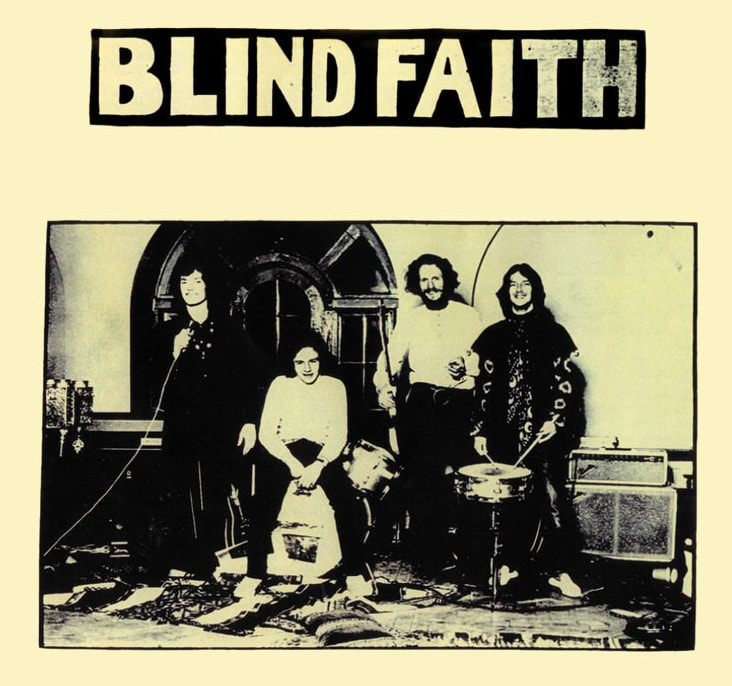
​The band Blind Faith (with Eric Clapton and Steve Winwood) produced some great music, but blind faith is a lousy way to think about God. From the ancient Israelites to all of us today, God does not expect blind faith. We possess eyes to see, ears to hear, and a mind to think. Just a few examples from the Bible include Moses hearing from God in a burning bush and seeing the Lord’s mighty works (Ex. 3-12), the disciples listening to Jesus’ preaching and witnessing his resurrection (Mk. 9, Lk. 24), Mary pondering what she was told (Lk. 2), and Paul saying that believers should think of all the good things of God (Ph. 4). In addition, we receive further reasons to believe through science, logic, and personal experience.
 
Certainly, belief in God’s existence still requires faith and trust. Although we can never "prove" God's existence in this life, the evidence unmistakably leads to the conclusion that God truly is real. Still, strictly speaking, none of us can actually "prove" anything. To prove is to absolutely establish that something could never be another way. We cannot prove we exist or that we are actually reading this essay. Perhaps we are dreaming, or we are just a brain in a vat being fed experiences. In actuality, none of us base our lives on proof; we base our lives on accumulated evidence that leads to the most likely conclusion.

God continues to reveal Himself in remarkable ways that tip the scales heavily in favor of belief. That’s why we are offering this series: to explore some of those reasons to believe. If you are a Christian, we hope to strengthen your discipleship. If you have not given God much thought, we hope to inspire you. If you have doubts, we hope to engage you. If you have been hurt by the church or hurt by Christians, we hope to encourage your healing. In all, we hope you’ll “Explore the Way” of faith in Christ.
 
First, we begin with the fundamental question, the first among questions. Before we can explore who God is, whether the Bible is trustworthy, or did Jesus really rise from the dead, we must ask why is there something instead of nothing; how and why are we here at all instead of a vast, dark nothingness? The moment something begins to exist, an explanation is expected. How and why did something come into existence in the first place? If we look at a violin, we don’t assume that it “popped” into existence out of pure nothingness. We presume it began to exist (it had a beginning, it was created), and it had a beginner (it was caused to exist in the first place).
 
Thus, the proposition follows:
  1. Whatever begins to exist has a cause (a beginner).
  2. The Universe began to exist (via the Big Bang).
  3. Therefore, the Universe has a cause (the Beginner, a.k.a. the First Cause).
There are only two options when it comes to the origin of the Universe. Either our Universe has eternally existed, or it was caused to exist (it had a beginning). “Nothing” cannot create something because it is nothing – no thing! Scientific evidence now demonstrates that the Universe had a beginning at the Big Bang, and thus if space, physical matter, and time had a beginning, then the beginner (the First Cause) must be spaceless, non-physical, powerful, and timeless (with no beginning). Sounds a lot like God! In other words, if space, matter, and time had a beginning, the Beginner could not have been created out of matter, nor bound by time because they had not yet been caused to exist. That which is timeless, God, is by definition without a beginning and was not caused to exist.

In addition, Einstein's theory of General Relativity shows that space, matter, and time are co-relative, which means they had a co-beginning; they came into existence together. Theologian Thomas Aquinas referred to God as the Uncaused First Cause, and Aristotle described God as the Unmoved Mover. Or, as mathematician John Lennox stated, "Either matter gave rise to mind, or mind gave rise to matter." We know that matter (physical substance) is not eternal. John 1 in the New Testament asserts the eternal presence of the Word, the non-physical mind of God, prior to creation. The evidence supports this assertion.

Does this evidence-based Uncaused First Cause proposition prove God exists? Perhaps not on its own to everyone, but this foundational proposition is also the first piece of a large and extended family of evidence that makes the case for God’s existence and thus compels our attention.
---------------------------------------------
Despite a belief in God as The First Beginner (the Uncaused First Cause), there clearly remains some mysteries of faith. For example, the painting of Jesus shown below. This work shows extra-ordinary technique…literally.
 
Akiane Kramarik grew up in a non-religious, non-churchgoing home. Yet, at the age of four, she said God encouraged her to draw and paint the visions she saw. By age seven, entirely self-taught, she completed her first painting, and just a year later she completed her favorite work, Prince of Peace (below). Is she simply an artistic savant? Perhaps. And yet, she describes remarkable spiritual experiences she had as a young child that inspired and gifted her with a kind of miraculous ability.
 
Science, logic, and personal experiences: God is not hidden, just veiled. God offers us glimpses, experiences, and evidence of His existence, and God reveals Himself in ways that fortify faith without halting our desire to pursue more of Him. Our challenge is to pursue and ponder what God reveals in order to believe and grow in faith – deep faith, but never blind faith. There are reasons to believe. When Blind Faith’s Eric Clapton and Steve Winwood sang, “Can’t find my way home,” we can imagine Jesus responding, “Yes, you can. Follow me.”

Picture
0 Comments

Do You Know the Muffin, Man? -- (2 of 12)

10/28/2023

0 Comments

 
Picture
​Consider a man walking – hundreds of years in the future. He pushes through a set of trees and sees a tremendous mountain. On the peak he beholds four giant faces as if they are emerging from the mountain itself. What should he assume? What would you assume? Did these four intricately detailed faces we know as Mount Rushmore come about by the natural process of rain and erosion? Of course not. That man and you would wonder, “Who designed and created such an impressive display?”
 
In our previous essay, we demonstrated that the Universe is not eternal (Big Bang evidence shows that the Universe had a beginning), and that something cannot spring into existence out of absolute nothingness. As such, the best answer to the origin of our Universe is a designed beginning emanating from a kind of mind (John 1) - the Uncaused First Cause or the Unmoved First Mover. At this stage in our exploration, we can additionally identify data that point to this Creator of the cosmos via the remarkable design within space.
 
In 2007, Antony Flew, one of the 20th century’s most prominent philosopher and atheist (a person who does not believe in God) stunningly announced that he now believed in God. In his thundering book, There Is a God, Flew stated his belief in a “divine Source” because it was the best answer to the evidence that had “emerged from science.” Following the Big Bang, as we look across the cosmos of planets, stars, celestial dust, and black holes, we are faced with two options:
  1. The cosmos came about by unguided, random chance.
  2. The cosmos is designed, that signs of design are evident, and that these signs point to a Designer (God).
(It is important to also note that while there remains more than enough evidence of design in the Universe to infer a Designer (God), there is also evidence of some imperfection, deformity, decay, and disease. Later in this series, we will explore the characteristics of God and whether God and His creation are imperfect, or whether, as the Bible describes, there was a Fall or a corruption of God’s good creation.)
 
What then is our evidence for an extraordinarily fine-tuned Universe that we can measure and study? Although much of cosmology and astrophysics can get very technical, consider this: If you gather all the stars, planets, moons, galaxies, nebulae, gas, and dust in the Universe, it makes up just .27% of the ingredients in the Universe. The rest is made up mostly of dark energy and dark matter (but don’t worry about what that is). The point being, if we were to change the total quantity of the ingredients in the Universe by just 1 part in 10 to the 122nd power, there would be no possibility for life. That number is a 1 with 122 zeroes after it. That’s a big number, and that’s big fine tuning!

In other words, think of a gigantic muffin recipe that calls for enough flour to fill the entire volume of planet Earth. We all know how tiny a single grain of flour is. Consider this: If you were to add ONE GRAIN of flour or take away ONE GRAIN, the recipe would be ruined. That is how extraordinarily fine-tuned our Universe is and how mathematically impossible it is that creation came about by random chance.
 
Additionally, our Universe is expanding (stretching) and it has been since the beginning. However, if the rate of expansion one second after the Big Bang had been smaller by 1 part in a hundred thousand million million, the Universe would have collapsed on itself. If the charge of an electron had been only slightly different, stars would have exploded. If the strength of gravity were changed by 1 part in ten thousand billion billion billion there would be no life-supporting world. The exact tilt of Earth’s axis, the position and characteristics of our Moon, the specific role of Jupiter, and many other precise factors all contribute to a perfect Universe for life. In short, our Universe displays truly remarkable, unfathomable, fine tuning. Only a Designer best explains such elegant and complex design.
 
Critics will counter with a theory known as the multiverse, the idea being that if you have enough universes beyond ours (a near infinite number), one is sure to randomly, and by pure chance, support life. However, multiverse remains only a theory supported by speculation and not by independent evidence. Is it wise to bet everything on such speculation and unsubstantiated theory?
 
If we would never believe that the faces of Mount Rushmore were the result of random rain and erosion, then why would we ever believe our Universe randomly took shape to such a profoundly perfect degree? The science and the numbers don’t lie. The finely tuned aspects of our Universe remain truly extraordinary, and they only become more so as time and science have advanced. This is what Antony Flew meant when he said his faith relied on what had “emerged from science.” 

p.s. "Do You Know the Muffin Man" is a traditional English nursery rhyme referenced in the movie, Shrek. Now you know.

0 Comments

"Jacob Loves Rachel" -- (3 of 12)

10/14/2023

0 Comments

 
PictureFlagellum
​Macro or micro. Big or small. Biggest or smallest.
 
In our previous essay, we explored the macro – the Universe – the biggest, most vast expanse in all of existence. Despite it being at least 13.8 billion years old and 92 billion light years across, we can still observe the Universe and measure its exquisite, fine-tuned design. This week, we peer inward, deeply inward, into the micro – molecular biology – and yet again we find exquisite, impossibly complex, fine-tuned design.
 
As we examine the building blocks of life, what are our options?
(a) Life originated because of random happenstance.
(b) Life originated because of finely tuned design.
​
If (a) is correct, then life has no ultimate meaning; we are merely a product of accidental chemical and electrical impulses. If (b) is correct, then something that is designed must have a designer, and if a Designer (God) exists, then life by definition possesses deep spiritual and metaphysical meaning beyond our full mortal comprehension.
 
The development of electron microscopes in the early 1930s opened up a tiny world that previous scientists could not have imagined. The further we examine the realm of microscopic life, the more we discover astonishing complexity. 
 
For example, if you are walking along the beach and you see “Jacob loves Rachel” written in the sand, you don’t assume the waves wrote it. Even a short message of basic information such as this requires a mind to produce it. Natural forces do not create messages of information. And yet with DNA, a message 3.2 billion letters long resides in every one of the 40 trillion cells in the human body. DNA is genetic material containing all the information about how a living thing looks and functions. Every cell of every living thing carries DNA. Even a one-cell amoeba has within it a volume of information equal to 1,000 large textbooks. If you stretch out all of the DNA strands in a human body, they could reach the Moon and back 200,00 times. That’s a lot of information!
 
DNA operates like an enormous computer code, and where there is a code there must be a coder, where there is a message there must be a messenger. Additionally, DNA doesn’t mutate to create large amounts of new information necessary to produce increasingly complex body types. In the same way, typos are mistakes (like mutations) that do not add substantive new information to an essay. You don't get new and intelligent chapters in a book by random typos. The complexity of DNA information instead represents positive evidence for an intelligent designer.
 
Consider also the flagellum, a hairlike “tail” that helps some cells and microorganisms move and swim. A bacterial flagellum, like a motor on a boat, is a type of rotating propeller attached to a drive shaft and motor fueled by a flow of acid. It is a remarkably complicated system of numerous different parts with specific functions that relate only to flagellum movement. Remove one of the 40 different proteins necessary for the construction and activity of a flagellum, or any of its unique parts, and it ceases to work as intended. The odds of a flagellum emerging on its own by random chance were calculated to be virtually impossible, falling outside of the accepted boundaries of random probability. Either the flagellum is the result of an inconceivable series of coincidences after coincidences, or it is by design, which then requires a designer.

​Many other biological systems are equally or even more complex: the human eye, biochemistry of vision, blood clotting, cell membranes, antibodies, photosynthesis, and many more. All are composed of different parts that must come together in extremely intricate ways for the system to function properly. Furthermore, these disparate parts possess no function apart from the system in which they operate. Yet, these parts somehow develop and assemble together to collectively produce a phenomenally intricate system such as human vision or a flagellum. The more we discover about micro-complexity, the clearer it becomes that random chance simply cannot stand up to sustained scrutiny.
 
Still, many scientists steadfastly refuse any other possibility beyond a random, natural (material, physical) explanation for the origin and complexity of life. As Dr. Richard Lewontin, biologist and geneticist, asserts:
“We take the side of science in spite of the patent absurdity of some of its constructs, in spite of its failure to fulfill many of its extravagant promises of health and life, in spite of the tolerance of the scientific community for unsubstantiated just-so stories, because we have a prior commitment, a commitment to materialism… Moreover, that materialism is an absolute, for we cannot allow a Divine Foot in the door.”
 
Adding it all up, where to place our faith becomes clear. Biochemist, Michael Denton, sums it up well:
“The complexity of the simplest known type of cell is so great that it is impossible to accept that such an object could have been thrown together by some kind of freakish, vastly improbable, event. Such an occurrence would be indistinguishable from a miracle.”

0 Comments

Beauty In the Eye Of -- (4 of 12)

9/30/2023

0 Comments

 
“In all ranks of life, the human heart yearns for the beautiful; and the beautiful things that God makes are His gift to all alike.”  
      - Harriet Beecher Stowe
 
“Wow, look at that beautiful sunset!”
“Are you kidding me?! Sunsets are disgusting and ugly! They make my stomach turn.”
      Said no one, ever.
 
People from different lands and cultures across human history recognized the beauty of a colorful sunset. Poets, painters, and musicians throughout time have written, sung, and depicted the beautiful wonder of sunsets, waterfalls, mountains, lakes, people, animals, and art of all kinds. Beauty surrounds us, but is beauty only in the eye of the beholder? Is beauty just an individual statement of preference?
 
In our previous three essays, we explored three rather technical assertions:
1. The Universe did not self-create from absolute nothingness, but in fact had a beginning (Big Bang) and therefore a Beginner (God).
2. The cosmos gives ample evidence of extreme fine tuning, and the odds of this occurring by random chance remain so long as to be impossible. The more that scientists learn of the Universe and its properties, the longer the odds become for it all occurring randomly.
3. Biology, and especially DNA, also demonstrate extreme fine tuning, which random chance fails to explain. Such fine tuning testifies to a Fine Tuner (God).
These represent three powerful arguments for the existence of God, but they can also become complex and detailed subjects. What if we can perceive God through something as straightforward as beauty?
 
Why do we all recognize beauty? Well, first we need to clarify the concepts of objective and subjective. Think of it this way: Jacob and Rachel enter a room. The thermostat shows the temperature is 75 degrees Fahrenheit. Jacob says it feels hot. Rachel says it feels cold. The temperature is objectively 75 degrees. They both know it is 75 degrees, but what they feel is subjective. Likewise, with beauty. No one looks upon a red rose, the Grand Canyon, or a golden retriever puppy and sees repulsive ugliness. (Any such person would be rightly described as disconnected from reality.) Such things are objectively beautiful, we all agree, even though we may feel a subjective level of intensity for such beauty. We can objectively recognize classical music as beautiful while subjectively feeling that “it’s not my kind of music.” (Which would be unfortunate.) Many examples of objective beauty exist across time and cultures. All human beings agree that some things are objectively beautiful. How can this be?

There remain essentially two candidates for addressing objective beauty. The first is naturalism (a.k.a. materialism or physicalism): the belief that all things naturally arise from within nature – nothing exists outside of our physical world. Naturalistic explanations often deny the existence of objective beauty at all. As author, Steven E. Parrish notes: “Given naturalism and an impersonal Universe…one would have to say that beauty is something totally subjective, and the fact that we see beauty and enjoy beautiful things is a product of mindless evolution. In this case, it is something of a quirk. If the mutations of our ancestors had been a little different, we might think that piles of garbage were beautiful.”
 
If naturalism accepts any form of objective beauty, it is only due to evolution (a theory of unguided, natural processes), which states that any so-called beauty has value only if it furthers the health and fertility of our species. Yet, one can imagine our ancient ancestors gazing at the beauty of a sunset and not noticing the approaching lion, thereby making beauty a detriment to survival. And if beauty aids survival, why don’t apes, dogs, or termites demonstrate some kind of appreciation or expression of beauty? Presumably they want to survive, too. Yet, animals survive just fine without beauty. Shouldn’t humans also be able to survive and thrive without beauty? Plus, we all recognize and appreciate many beautiful things that have nothing to do with survival or reproduction. In short, naturalism fails to explain why objective beauty exists at all.
 
The Christian affirms objective beauty not because of naturalism but because of supernaturalism – a spiritual perspective added to a scientific and philosophical framework. This represents the best option for explaining objective beauty:
a. If objective beauty exists, then a standard of beauty exists outside of ourselves.
b. Objective beauty does exist as demonstrated across time and cultures.
c. Therefore, an objective standard of beauty exists outside of ourselves, our needs, and our individual perspectives or preferences.
Naturalism fails to explain how an objective standard of beauty came to be, and therefore a supernatural origin (Creator God) remains the best explanation based on the evidence. 
 
God created all things and thus created that which is objectively beautiful. Human beings, created in God’s image, are given the unique ability to recognize, appreciate, and create beauty. We reflect God’s creative character in us. In this sense, beauty is indeed in the eye of the beholder, the Divine Beholder: God. As Helen Keller, born blind and deaf, so beautifully stated:  “The best and most beautiful things in the world cannot be seen or even touched - they must be felt with the heart.”
0 Comments

What is Tall? -- (5 of 12)

9/16/2023

0 Comments

 
What is tall? Is 5’10” tall? What about to someone who is 5’3”? Is 6’2” tall? What about to someone who is 6’8”? Unless there exists an objective standard for what is tall (a definition outside of personal or societal opinion), tall becomes just a matter of subjective feeling. 
 
In our previous essay, we noted the difference between objective and subjective. (Please go back and take a look for a more in-depth description.) Objective is, for example, the accurate measured temperature of something. Subjective is how we feel about the temperature: too warm, too cold, or just right. (Thank you, Goldilocks.) Subjective is opinion, objective is truth regardless of opinion. As with tall, how do we know what good and evil are? Is there an objective moral standard, and if so, from where did it originate? Our options are:
1. Individuals and society determine moral standards.
2. Morality evolves over time, and thus societies become more moral over time.
3. Certain moral standards are established by a Creator and are a part of the creation of human beings.

The problem with #1 is that it is entirely subjective, ultimately based on opinion. For example, Society-A decides that murdering other humans is always morally bad. So, what? Society-B decides that murder is morally good as long as it benefits them. Without an objective moral standard outside of opinion, Society-A cannot tell B that murdering them is morally wrong. It is all opinion.

[Point of note: murder and killing are not the same. Murder is the immoral, unlawful killing of a human being. Certain killings under certain circumstances can be both moral and legal as in self-defense, law enforcement, or morally necessary warfare.]

Under option #1 above, societal morals are determined only by consensus or force. Thus, I convince others that my moral view is correct, and we establish laws codifying those morals. Or, you have the biggest weapon and are able to force your moral views on others. In either scenario, morality is based on and enforced by subjective choices, which can then be changed anytime by further consensus or force.
 
Consider also the statement that abusing a child for fun is always morally wrong. The societal argument says that it is always wrong because it damages the child, likely for life, and is damaging to the abuser, thus making overall society worse. However, what if a pill could be developed to ensure that the child would have no memory or scars from the abuse, and that the abuser would also not be psychologically damaged. Is it still morally wrong to abuse a child for fun? Of course, it is. We all know it is always (objectively) morally wrong and evil under any circumstances. Option #1 fails.

[Point of note: a society is indeed based on both subjective and objective morality. Murder is objectively immoral - wrong for all people at all times. In addition, for example, America agrees on certain subjective moral standards of kindness toward animals. Other nations disagree. And the existence of objective morality does not mean that people's behavior necessarily and always adheres to this morality. God in His wisdom allows human beings to know objective morality (through our conscience and mind) and still not follow it. Our ability to violate objective moral standards is not relevant to the fundamental issue of the existence of objective morality.] 
 
Option #2 above posits that morality is not objective but is instead always evolving, that evolution drives moral goodness. If that is true, then we can never actually know what is truly moral. What we think is moral now might be morally evil later as we “evolve.” Any evolution-based moral assertion could be easily countered by responding, "Who says?! Isn't it just as likely that we are evolving away from your moral view and toward my moral view?" Plus, this option, while supposedly rejecting objective morality, still ultimately supports an objective moral standard toward which we are supposedly evolving. Option #2 also fails.
 
Now, it is important to note that a person who does not believe in God can be a morally good and kind person. Conversely, someone professing religious moral values remains capable of committing morally bad acts. (They either do not really believe what they profess, or sin can still impact an honestly religious person.) However, these two truths have nothing to do with the issue of whether objective morality exists. Human beings, although knowing deep down that certain actions are always morally wrong, sometimes act otherwise and can even convince themselves that their evil actions are somehow justified. For example, people know intuitively that human sacrifice is wrong, and that the Holocaust was evil. Such events remain rare in overall human history and are clearly recognized through the ages as objectively evil even though some people chose to act that way. Human behavior involves an amount of human will. God’s existence does not ensure that all people will act perfectly moral; it only ensures that a standard of fundamental good and evil exists outside of personal opinion or societal assertion.
 
Therefore, we can assert the following proposition:
1. If objective moral standards exist, then a Creator (God) outside of us must exist who established such moral standards.
2. Objective moral standards do exist.
3. Therefore, a moral Creator exists.
 
God gifts each of us with a basic moral compass. We know this deep down. This moral compass (conscience and mind) doesn't make clear every moral dilemma, but on basic issues of fundamental morality, we know what is objectively good or evil. God also, in His infinite wisdom, allows us to deny objective morality, ignore it, or convince ourselves otherwise; yet it remains our only infallible guide toward a decent and moral culture. As Rev. Martin Luther King, Jr. noted: 
“If we are to go forward, we must go back and rediscover those precious values - that all reality hinges on moral foundations, and that all reality has spiritual control.”
0 Comments

It's Personal -- (6 of 12)

9/2/2023

0 Comments

 
During the surgery, Pam’s eyes were taped shut, plugs were placed in her ears, and her body temperature was held at 50 degrees. She was clinically dead while undergoing a hypothermic cardiac arrest procedure to remove a life-threatening aneurysm. The whole operation was life-threatening, yet she survived. Later, Pam described in great detail everything that happened in her operating room: the personnel she had never met before, the specific instruments she had never seen before, how they were being used, the sounds they made, things people said…all from a viewpoint floating above her body. She was dead.  But then she was revived.
 
A neurosurgeon was placed in a medically induced coma due to brain and spinal cord swelling. The coma made him essentially brain dead, supported only by machines, but he was revived. He later recounted leaving his body, entering a realm of bright light and great peace, and meeting a young woman he did not know. Adopted as a child, and long after his near-death experience, the neurosurgeon finally met his birth parents and was shown a photo of his previously unknown biological sister who died years earlier. He immediately recognized her as the young woman he met within the bright light of his death coma. His career in neuroscience previously told him that such a conscious experience while clinically brain dead was not possible. But it happened.
 
Millions of people across history and cultures describe very similar near-death experiences of bright light, peace, and spiritual calm. These spiritual experiences share many similarities and resonate so strongly with those who have them that nothing can shake them from publicly asserting what they know to be true. Others prefer to only whisper about their mysterious spiritual experiences that impacted their perspective, life direction, or view of God. Their descriptions offer equally profound insights, but they opt to avoid the often misguided criticisms and irrational aspersions that so easily follow. Unlike with science and data, personal spiritual encounters cannot be measured, duplicated in a lab, or placed under a microscope. Nevertheless, such moments remain so real to so many people that their descriptions cannot be swept aside with a dismissive wave of the hand.

The immediate followers of Jesus of Nazareth claimed to have met and touched their crucified and risen Lord. So certain of their experiences, their previous fears of arrest and their own crucifixions disappeared as they risked death to proclaim this life-giving truth. Most, as history records, were tortured and executed for their enduring message of Jesus’ resurrection. Paul of Tarsus, an early persecutor of the first Christians, also encountered the resurrected Christ and became a Christian, a spiritual encounter so profound that it completely changed the direction of his life. He, too, suffered afflictions for proclaiming the truth of his experiences. Why would all these followers of Christ abandon their previous fears and unbelief to risk death? They did so because they were unshakably certain of their spiritual experiences.
 
Consider also that we all accept things as true that cannot be absolutely proven. To prove something is true means that it cannot possibly be another way. For example, we cannot prove that our existence did not begin five minutes ago with a built-in appearance of age, or that our brain is not just in a vat of chemicals being stimulated by a laboratory scientist. Yet, we all still hold certain properly basic beliefs (our foundation of knowledge) based on our experiences such as sight, sound, and touch. We agree there is a physical world around us because of what we experience. We may not be able to prove we possess an actual history longer than five minutes, but we all rationally accept this to be true based on our shared experiences. Similarly, it can be entirely rational to believe that our personal spiritual experiences are true in the absence of any provably more rational explanation.
 
A young child hears the voice of Jesus telling her, “Paint what you see.” At age four, she begins to create. Having never been to a church and not raised in a religious home, she nevertheless paints Christian images with extraordinary skill, including the painting on the banner of this page completed when she was only eight years old. Should we discount the impact of Akiane’s spiritual experiences on her astonishingly brilliant artistic skills? She asserts that spiritual experiences guided her. In the absence of a more provably rational explanation, it is, in fact, equally or more rational to believe her sincere and fervent accounts of her spiritual experiences that so impacted her life and the world.
 
Despite the fact that some people lie about their experiences, are simply mistaken, or can be explained scientifically, countless other personal spiritual experiences impact scores of people for reasons that are often difficult to comprehend or explain. Neurologists still cannot scientifically explain near-death experiences or instances of consciousness separate from our physical body. Visions, healings, even prayerful guidance or insight astound and captivate us while insisting on deep spiritual discernment and consideration of God as Creator.
 
Aside from theologians, scientists, and philosophers, perhaps pop musician Justin Timberlake put it most clearly:
“I can honestly say I am a Christian, but my spirituality has been developed on the road and is based on my experiences with God.”
​

Pam, the neurosurgeon, Akiane, and Jesus' apostles all proclaim the truth and the mystery of spiritual encounters. Although there are many others across history who also recount profound spiritual experiences, if only ONE person actually experienced spiritual consciousness apart from their physical body, then there must be more to each of us than mere physical matter. Pam floated above her physical body seeing and hearing all that took place in the operating room. The neurosurgeon was spiritually visited by someone he did not know but would know later. We are all, in fact, both soul and body, spirit and matter, created in the image of a spirit God (Gen. 1) and given a physical body within this material world.

Want to know more about God? Consider reaching out to people who’ve had personal experiences with God and ask them. Chances are, they’d love to tell you.
0 Comments

Chain of Custody -- (7 of 12)

8/19/2023

0 Comments

 
They abandoned worship at the Jerusalem temple because of widespread corruption, gathered up their scrolls of Scripture (the Hebrew Bible) and retreated in the 300s B.C. to Qumran near the Dead Sea. When the Romans threatened the region, these believers hid their scrolls in the dry caves high above Qumran. The scrolls remained hidden until 1947, over 2,000 years later, when a Bedouin boy found them while searching for his goat.
 
The Dead Sea Scrolls represent one of the greatest archaeological discoveries in history, and they authenticate in remarkable ways the reliability of our contemporary Old Testament texts. Among the many discoveries was a complete scroll of the entire book of Isaiah. Although our oldest copy of Isaiah at that time was from the 1000s A.D., the Dead Sea scroll of Isaiah, written 1,000 years earlier, was a near exact match! For example, in comparing the texts, of the 166 words in the book of Isaiah chapter 53, there are only 17 letters in question. Ten of the letters are simply a matter of spelling, which does not affect the meaning at all. Four more letters are minor style changes, such as an added “and.” The remaining three letters spell the word "light," which is added in verse 11 and does not affect the meaning. In short, what the Dead Sea scrolls demonstrate is highly careful and exact transmission of Biblical texts down through the ages!
 
For the New Testament, our confidence in its reliability is even greater. True, we do not, for instance, possess the parchment on which Mark wrote his Gospel. However, this should not be surprising because we essentially have NO originals for any of the writings from the Ancient World. Still, is it reasonable to believe that we possess what the authors originally wrote? Or, has the text passed through too many hands over too much time to be trusted?
 
The New Testament remains the best preserved ancient text in history with 27,000 complete books or sections of the text in our possession. The oldest section dates from mere decades from the original, and the oldest complete New Testament dates to a little more than 200 years after the original. Compared to Homer’s The Iliad, the second best preserved ancient work, which is routinely taught in schools, there remain just 643 complete works or fragments of the text, but the oldest copy dates to 500 years from the time of the original.
 
Critics claim that the New Testament includes 400,000 variations among the many copies of the ancient texts, which sounds like a lot. However, of those variations, the vast majority are due to simple (easily identifiable) scribal errors of spelling or grammar. Less than 1% of those variations impact the meaning of the text, and while most variations have been resolved, NO Christian belief or teaching is impacted by the few variations among the ancient New Testament texts.
 
Along with preservation of the New Testament text, its internal evidence demonstrates its truth. First, no credible scholar disputes that Jesus of Nazareth lived and died in the early first century A.D in southern Israel. Historical sources outside of the New Testament mention him, albeit briefly because at the time they could not have imagined his impact. In the first century, women were not eligible to testify in a Jewish court of law. They were considered too emotional and unreliable. Yet…in the Gospels, women are the first witnesses of the resurrected Jesus Christ! Jesus calls Peter, “Satan,” and the disciples are all cowering in fear following Jesus’ crucifixion thinking they will be arrested and killed next. Just a few days later they charge into the street to proclaim his resurrection. Such “embarrassing” details would certainly have been edited out of the story unless it was what actually happened.
 
In addition, most of the books of the New Testament were written prior to 70 A.D., within roughly 35 years of the crucifixion, by eyewitnesses, personal associates of eyewitnesses, and within the lifetime of eyewitnesses. History also records that most of those who first proclaimed the reality of Christ’s resurrection died excruciating deaths. At any point they could have renounced their faith and lived. They didn’t because they knew the truth.
 
In the end, it is indeed reasonable to assert that we possess accurate accounts of the events and the teachings of Christianity. According to classical literature scholar, Giorgio Pasquali, “No other Greek text is handed down so richly and credibly as the New Testament.”
 
Police detectives call it chain of custody: evidence collected at the scene and properly handed from one to another to another all the way to the court room. In recording the life, death, and resurrection of Jesus Christ, we know of John the apostle, an eyewitness. He had three students, Papias, Ignatius, and Polycarp, who wrote to their students what they learned from John. Their student, Irenaeus, wrote to his student Hippolytus. From there to the first council of Nicaea to today, we see that what is proclaimed about Jesus has not changed. God exists (see our previous six essays), and God in Christ preserved his Word for us and to us. As retired homicide detective, Warner Wallace, notes, “The Jesus we know today, God in flesh, born of a virgin, rose from the dead, that Jesus is present at every stage in the chain of custody to today.”

Post Script:

The Bible’s Deuteronomy 31 records God telling Moses to read out loud the law (their Bible) every seven years. Such a tradition preserved the accuracy of the text for generations to come.
0 Comments

He is Risen, Indeed -- (8 of 12)

8/5/2023

0 Comments

 
He wrote close to 30% of the entire New Testament, and he was beaten, jailed, and likely killed because of his message. Paul the apostle wrote to the new Christian church in Corinth: “If Christ has not been raised, our preaching is useless and so is your faith” (1 Corinthians 15:14).
 
The literal resurrection of Jesus Christ is Christianity. But did it really happen? Could it really happen? The fact is, if the resurrection was an actual moment in history, it literally changes everything! What then are the most common objections to the resurrection?
 
First, Jesus wasn’t really dead (swoon theory); he may have been arrested and crucified, but he somehow survived perhaps through a drug-induced drink (Mark 15:36). Although this objection remains a common one, it actually receives little scholarly attention because:
   (a) the Romans were experts at crucifixion;
   (b) soldiers themselves risked death if they failed to complete an execution;
   (c) even if Jesus survived, his bloody and agonized body would not have caused followers to believe in a resurrection any more than it would have today.
 
Second, the dead body was stolen. Jesus was certainly no common criminal as he generated great interest and a significant following. The Jewish ruling council had a vested interest in making sure he was dead and buried in a guarded tomb. Matthew, Mark, Luke, and John all note that Jesus was buried in a tomb by Joseph of Arimathea. The first eyewitnesses of the empty tomb did assume a stolen body. Soon after, as Jesus’ resurrection was being proclaimed, if the Romans or Jews possessed the stolen body, all they had to do was present it to stop any further talk of resurrection. They didn’t because it wasn’t.
 
Third, claims of resurrection were a mass hallucination of people who wanted to believe a resurrection had occurred. Actually, the Bible describes Jesus’ followers as having given him up for dead (Luke 24:1-11; John 20:24-26), and they were shocked by his resurrection, not expecting it. Hallucinations are not a group phenomenon, and the Bible records Jesus appearing at different times, to different people, and in different circumstances, thus making mass hallucination impossible.
 
Fourth, although the Bible accounts appear to differ in their details of the resurrection, a disciplined approach to Bible study yields their harmony. For example, Matthew describes one angel at the empty tomb while John describes two. However, only one angel speaks. Matthew could simply be highlighting the one who spoke, and of course, whenever you have two of something, you also have one. Likely both writers are describing the same scene with different emphases. Furthermore, critics would additionally object if all the accounts of the resurrection were exactly alike. Slightly differing accounts are actually evidence of non-collusion.
 
Even if there were (and we assert there are not) significant discrepancies within the New Testament, the unity of minimal facts demonstrates total agreement that:
   (a) Jesus was crucified, dead, and buried;
   (b) his followers cowered in fear assuming they were next to be arrested and killed;
   (c) he was resurrected in bodily form;
   (d) he appeared to his closest disciples, and to many others, who then charged fearlessly into the crowds only days later to declare his resurrection!
In fact, from the earliest moments of Christian worship, believers were proclaiming the deity of Christ and his sacrificial crucifixion and resurrection. No evidence exists showing an early form of Christianity that did not proclaim the resurrection as the central belief.
 
Historians note that it takes 30-60 years before legend can be confused with facts. As long as eyewitnesses are alive, legend gets muted. Paul’s first letter to the church in Corinth, written barely 20 years after the resurrection, was far too early to have incorporated legend. Paul was an eyewitness himself, and initially a reluctant one, given that before his Christian transformation he was a zealous Jew who arrested and persecuted Christians. What motive would he have, or would all of the first witnesses have, to lie about their belief in the resurrection? History records that the most influential of these first witnesses all died for their beliefs, further underscoring the truth of their encounters with the Resurrected Christ.
 
The central tenets of Christianity initially seem so illogical:
(1) its central figure arrested and crucified as the lowest form of criminal;
(2) its first followers confused about his message, objected to him at times, denied knowing him, and hid in fear after his death;
(3) its first eyewitnesses to the resurrection were women (whom ancient near eastern culture considered unreliable in court testimony).
No one would invent such details in order to “start” a new religion.
 
The accounts in the New Testament reliably describe real human beings reacting as real human beings would. They wept at Jesus’ torture and mourned his humiliating death. His closest associates feared for their own imminent arrest and condemnation, and when confronted with an empty tomb, they assumed a stolen body. And yet, within days, these questioning, mournful, terrified people marched into the Jerusalem crowds, in full view of the Jewish and Roman leaders, boldly declaring Jesus’ resurrection! What happened to them to cause such a rapid transformation? The answer is the same experience that caused Peter to reverse his denial of knowing Jesus in order to proclaim him the Divine Savior, for Jesus’ own brother, James, to proclaim him the Lord’s Messiah, and for Paul to cease persecuting Christians in order to proclaim him God in flesh – Jesus truly did rise from the dead!
 
In the Old Testament, the prophet Isaiah proclaimed the coming of the Messiah (Isaiah 7, 9, 52-53). Paul saw and experienced the fullness of this Resurrected Christ that he wrote about and that we confidently proclaim today:
“For what I received I passed on to you as of first importance: that Christ died for our sins according to the Scriptures, that he was buried, that he was raised on the third day according to the Scriptures, and that he appeared to Peter and then to the Twelve. After that, he appeared to more than 500 of the brothers and sisters at the same time, most of whom are still living, though some have fallen asleep. Then he appeared to James, then to all the apostles, and last of all he appeared to me also…Christ has indeed been raised from the dead” (1 Corinthians 15:3-8).
 
And by the way, the truth of Paul’s words does indeed change everything.
 
Post Script:
If the resurrection is truly central to Christianity, why is it being addressed in article #8 in our 12-part series? Why not first?
 
Our series began by demonstrating the existence of God via
- science: cosmology (something cannot come from nothing), our exquisitely fine-tuned universe, the extreme complexity of biology;
- philosophy: objective morality and objective beauty indicate a standard outside of ourselves;
- personal experience: human consciousness exists beyond physical existence;
- reliability of the Bible: its trustworthiness and truthfulness.
 
With this foundation of evidence and information, we may now better assess the reasons to believe that the resurrection actually occurred.
​(To explore articles 1-7, please see this page.)

0 Comments

Thermostat > Thermometer -- (9 of 12)

7/22/2023

0 Comments

 
Welcome, Christmas morning!
You happily open a gift from a friend, and although it is nice, it’s just not you. The thoughtfulness of the gift is well-appreciated, but it isn’t quite right because this friend doesn’t actually know you that well. The next gift you open is so perfect, so you, so exactly right! Your emotions overwhelm you because this gift-giver knows you very well; in fact, this gift-giver knows you far better than you even know yourself. This gift is the Church, and this Gift-Giver is Christ himself. He knows us and has given us exactly what we need:
“The Holy Spirit has made you overseers, to shepherd the church of God that He purchased with His own blood.” (Acts 20:28)
 
What is the church? We may understand it in two ways:
Universal church: composed of all the followers of Christ worldwide and not bound by an organization or building.
Individual church: local assemblies of followers of Christ who gather for sacred purposes, typically within a building.
Much of the New Testament consists of letters to fledgling churches. The Bible calls the church the Body of Christ, Bride of Christ, Temple of God, Communion of Believers, and Divine Family. What a tremendous gift, indeed!
 
Why is the church so important? Christ’s church remains an institution in which his followers can thrive and make known the gospel - an organization for all time meant to teach and live out the example of Jesus Christ. The church offers worship, a place of group and individual prayer, it teaches and preaches the great truths of the Bible, and it offers the comfort of traditions and ritual that connect to thousands of years of an unbroken line of inspired believers. The church was never meant to simply reflect the temperature of the culture around it, like a thermometer. Instead, the church should represent a thermostat, helping to set the temperature of culture and society through love, kindness, wisdom, and knowledge as expressed by Christ in the Bible.
 
Some prefer to say, “I’m spiritual, but not religious.” Sadly, people with an honest desire for spiritual nourishment too often reject the very gift of the church given by Christ. The Bible, tradition, and experience makes it clear that there are no Christian islands. Believers are meant to be together in the church, we need to be together, supporting each other, encouraging each other, serving the needs of others, and holding each other to high standards in Christianity.
“Let us consider how to stir up one another to love and good works, not neglecting to meet together, as is the habit of some, but encouraging one another.” (Hebrews 10:24-25).
In this age of individualism and relativism (all is relative to personal preference), a strictly personal spiritualism inevitably leads to “the Church of Me” – my preference, my wants, my standards. Christ’s gift to us offers a better way.
 
Nevertheless, some churches and some church people have acted hurtfully. According to the Word of God (and our own practical experience), all human beings are sinful, imperfect, and struggle with right and wrong. As such, individual churches, members, and even pastors can sometimes cause hurt, wrongly condemn, and constrain honest questions or doubts. Such hurts must always be acknowledged and corrected. Jesus even recognized this reality:
“I appeal to you, brothers and sisters, to watch out for those who cause divisions and create obstacles contrary to the teachings you have learned; avoid them.” (Romans 16:17).
Still, when we encounter a bad doctor, we don’t reject the medical establishment altogether. We find a better doctor. If we encounter a hurt from within a church, we need not reject all churches; we find a better one.
 
G.K. Chesterton once noted, “When people stop believing in God, they don’t believe in nothing; they will believe in anything.” Non-believer David Foster Wallace added, “There is no such thing as not worshiping. Everybody worships.” The question then remains, what will we worship and how? Do we worship sports, money, power, social media, lust, politics? How do we order our time, money, and priorities? Do we choose to worship what we want, how we want, and when we want? The history, tradition, rituals, and truth of faith calls us to something higher than our particular preferences, desires, and preferred standards of behavior. The church, in all its glory and admitted imperfection, calls us to gather together for support, encouragement, knowledge, accountability, and wisdom so that we can receive, proclaim, and demonstrate the good news of life in Christ.
 
The mission of Jesus as God/Man/Savior established an unstoppable movement reflected by the church - a living example of the love and expectations of God. Jesus Christ knows us – he knows us far better than we know ourselves. He knows what gift we need - more than we even realize – and the great benefits of embracing this gift.
“On this rock I will build my church, and the gates of Hades will not overcome it. I will give you the keys of the kingdom of heaven.” (Matthew 16:18-19)
0 Comments

Jesus Teaches Rebounding? -- (10 of 12)

7/8/2023

0 Comments

 
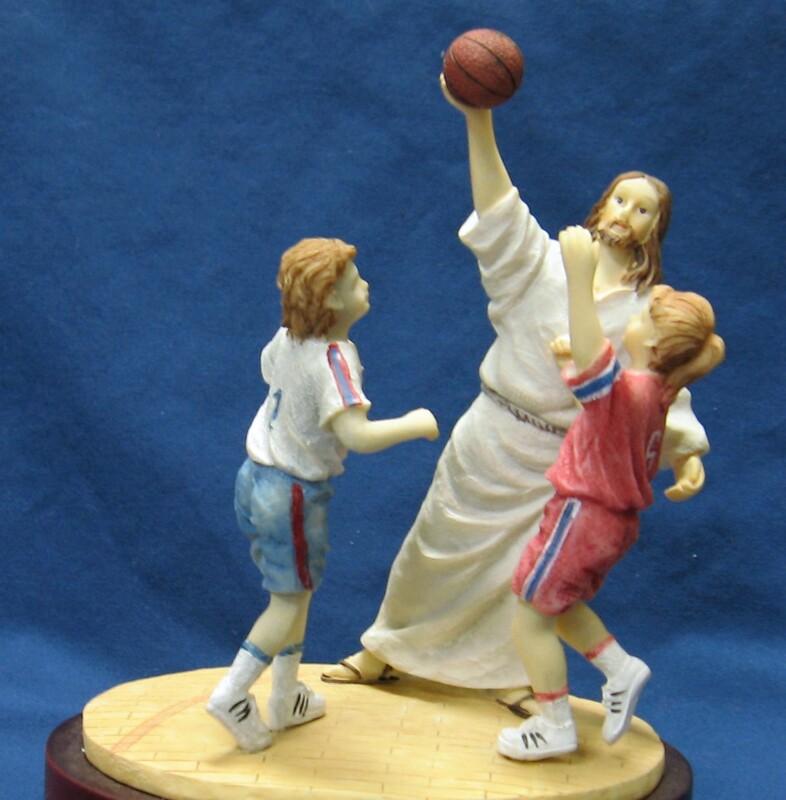
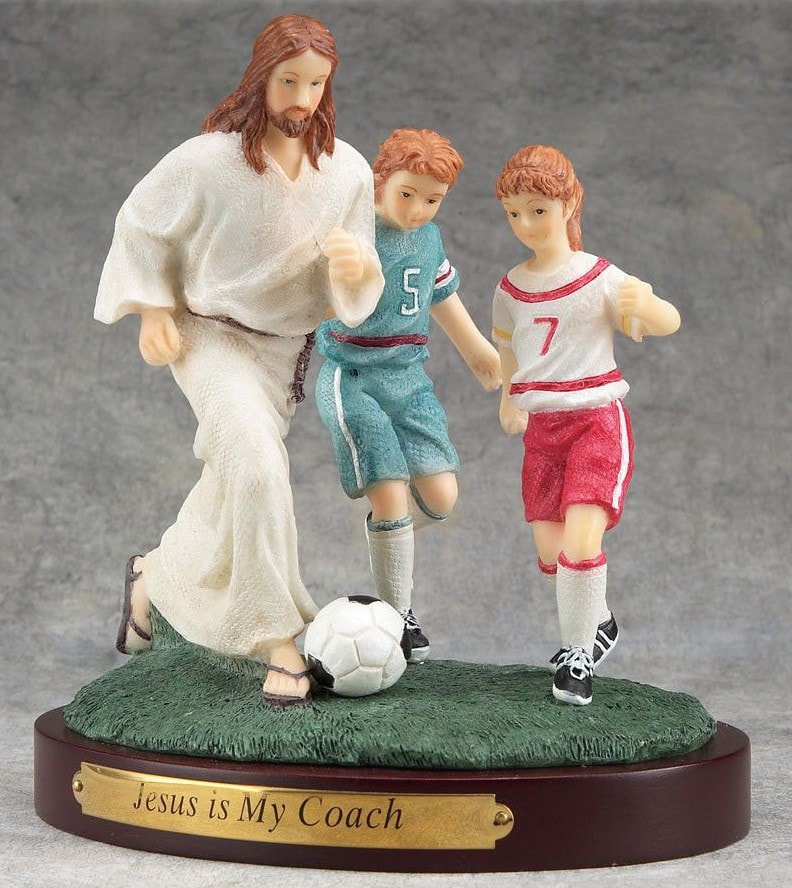
Jesus shows you how to swing a bat. Jesus passes you the soccer ball. Jesus gets the rebound.
 
A series of statuettes went on sale a number of years ago under the theme, “Jesus is my coach.” In that series, Jesus is shown helping children in various sports. The images are warm, personal, and very supportive, as if Jesus stands beside us to encourage us in whatever we do. (See below.) Although Jesus’ presence is not specifically about helping us swing a bat more effectively, these images are at least not thematically wrong, just incomplete.
 
Biblically speaking, it is the Holy Spirit of God who remains our guide and encourager, not about our specific rebounding skills, but in ways that assist us in living a full and Godly life:
  • “The Helper, the Holy Spirit, whom the Father will send in my name, will teach you all things and will remind you of everything I have said to you” (John 14:26).
However, it is difficult for physical, material human beings to relate to and envision a purely spiritual, immaterial Holy Spirit. As such, Jesus, God in flesh, becomes the most identifiable manifestation of God. Despite their playful presentation, these statuettes nevertheless display the larger truth that God remains near to and involved with His creation. In theological terms, this care and nearness is called God’s IMMANENCE: the intimate and active connection between God and each of us, His children.
 
Still, there is much more to God than His immanence:
  • “In the beginning, God created the heavens and the earth” (Genesis 1:1).
  • “For My thoughts are not your thoughts, neither are your ways My ways, declares the Lord. For as the heavens are higher than the earth, so are My ways higher than your ways and My thoughts than your thoughts” (Isaiah 55:8).
  • “For who has known the mind of the Lord, or who has been His counselor?” (Romans 11:34).
  • “Can you find out the deep things of God? Can you find out the limit of the Almighty?” (Job 11:7).
  • “Christ is the radiance of the Father’s glory and the exact representation of His nature, and He upholds all things by the Word of His power” (Hebrews 1:3).
Here, we recognize God’s exalted “otherness.” God in Father/Son/Holy Spirit, is also TRANSCENDENT, maker of the heavens and earth, awesome in Word and deed, powerful and wise in ways that transcend far beyond mere mortal human beings.

God exists as both immanent AND transcendent, near and far. He knew us before we were born, stitched each of us together, initiated our beating heart, and died for us because of His great love for us. The Bible calls Jesus, Immanuel, which literally means “God WITH us.” In addition, He also transcends human beings in every conceivable way and to a limitless degree. He set the stars and planets in motion, and Revelation 19:16 calls him “King of kings and Lord of lords.”
 
For each of us, the challenge remains to hold God’s immanence and transcendence in proper balance. Too much of the immanence of Christ, and we risk reducing God to our buddy, our pal, and one who understand that we want to sleep instead of going to church or to “worship” on the lake while fishing. Over emphasis on God’s immanence risks our trying to mold God into what we want, our standards, and our desires.
 
The transcendence of God should cause us to fall to our knees before the awesomeness of God. We become aware of God’s omnipotence, the ultimate source of morality and wisdom, the creator and sustainer of all. However, if we overemphasize God’s supreme greatness, we risk feeling small, insignificant, invisible, and so thoroughly “other” compared to God’s glory.
 
God exists both near and far, loving and personally encouraging, as well as immeasurably powerful and grand. God’s immanence reminds us His deep and abiding care for each of us while His transcendence reminds us that He alone is worthy of our worship and reverence. To hold both in proper balance is to experience the fullness of God.
 
The great Christian writer, C.S. Lewis, summed up God’s immanence and transcendence:
  • “God is ‘absolute being’—or rather the Absolute Being—in the sense that He alone exists in His own right…a man can no more diminish God's glory by refusing to worship Him than a prisoner can put out the sun by scribbling the word 'darkness' on the walls of his cell.”
And…
  • “Though our feelings come and go, His love for us does not…He died not for one person, but for each person. If there had been only one person made, He would have done no less.”​
Picture
Picture
Picture
0 Comments

A Parasite Upon Goodness -- (11 of 12)

6/24/2023

0 Comments

 
One look at the news and the age-old question arises again: why does a good God allow evil and suffering in the world?
 
We take up this difficult question in week 11 of our 12-part series because such a complex issue should not be considered in a vacuum; it must be considered in the light of established rational reasons for belief in God, that a God-given objective morality exists, and we can know God through the trustworthiness of the Bible. With this in mind, we can begin to approach the problem of evil and suffering.
 
First, consider that we humans, believers in God or not, recognize “shoulds” and “oughts.” We should be good. We ought to be kind. Humans should be better than we are. We ought not do evil. The fact that we all speak this way, and we all recognize that humans fail to meet such a standard, begs the questions: if there is no God, what are these shoulds and oughts that we are striving for? Who says we should be “better”? And how are “good” and “better” even defined apart from a God standard? What mysterious universal “good” are non-believers trying to attain? The truth is, without a God standard, good, better, should, and ought are mere opinions of an individual or group. To speak of good and evil is to speak of the nature and standards of God.
 
Genesis 1 makes it clear that God created all things “good.” Evil, therefore, is a parasite upon goodness, a twisting of the good. Badness is only spoiled goodness, and there must be something good before it can spoil. We can explain the perverted from the normal, but we cannot explain the normal from the perverted. Evil is rust on iron or a hole in the roof. As such, God is not the author of evil in the same way He is the author of good. God created all things good, but gave us an ability to do otherwise, which we have exercised. The story of Adam and Eve in Genesis illustrates this basic truth. We are not as we should be, and we all know it.
 
God knows and allows evil and suffering to occur but only within the boundaries of a greater good that only God knows; we do not because we are not God. Again, God exists and God is good, and so we can trust that although we avoid and abhor evil, we know God always intends a greater good. This understanding makes evil and suffering no less horrendous, but it does place our understanding (and our coping) within God’s wider perspective. Personal responsibility remains even as God knows and allows evil and suffering in order to bring about a greater good. “What you meant for evil against me, God meant for good,” said Joseph, sold into slavery, yet rose to prominence and saved many lives from famine (Genesis 50:20).

In addition, some moral goods are impossible apart from their response to evil. The church father Origen (c. A.D. 185-253) said, “Virtue is not virtue if it is untested and unexamined.” While the prototypical first humans lacked sin, they also lacked suffering and struggle that helps produce virtue. Courage, heroism, self-sacrifice, as well as triumph and patience remain unexpressed without struggle, danger, and even the reality of death. As Marshall Shelley of Denver Seminary observed, the greatest evangelist he ever knew never said a word or took a step. His severely disabled daughter, who lived only a few weeks, drew people together in deeper and more remarkable ways than could have ever been otherwise possible.
 
Ultimately, there remains a certain synergy among good and evil. Although evil is a twisting of good, our joy and happiness in life is made all the more sweeter because we know and experience evil. Evil gives joy and happiness greater value because of the alternative. If only joy existed, would we appreciate it as much without knowing the opposite?
 
Finally, a quick word about suffering caused by nature, sometimes incorrectly referred to as “natural evil.” Earthquakes, hurricanes, and other natural phenomena can certainly cause great suffering and devastation. Yet, we must also recognize that such acts of nature are an important part of sustaining life on earth. As physicist Hugh Ross notes:
“[Hurricanes] counterbalance the ocean’s tendency to leach carbon dioxide from the atmosphere. This leaching, if unchecked, would result in our planet’s catastrophic cooling.”
Earthquakes return essential nutrients to the land, tornados remove dense vegetation allowing new and diverse growth, and most of the viruses in our bodies are highly beneficial. Just as water, necessary for life, can also cause floods, and fire that warms can also burn, nature’s necessary attributes can sometimes cause harm. Within such harm, however, we yet find opportunities for kindness, sacrifice, and other virtues.
 
Evil is, well, a necessary evil. However, what is despairing is not evil itself. What is despairing is that with no God, there is no meaning in suffering. Such hardship becomes just bad luck - no purpose, no certainty of greater good. With God, no suffering is ever meaningless. It matters deeply to God who loves goodness, hates evil, weeps with us, and offers comfort.
 
“Every good and perfect gift comes from God” (James 1). We pervert our God-given goodness. Still, “In all things God works together for the good with those who love Him” (Romans 8:28). Many questions about evil and suffering essentially become boomerang questions coming right back at us. Why does God allow evil and suffering? Perhaps God responds, why do you allow evil and suffering? Why does God allow violence? Why do you allow violence? God is all good, all loving, all powerful, yet also infinite in His righteousness and wisdom. In ways we cannot truly comprehend, God allows evil for the purpose of a redemptive greater good, a good exemplified on an evil cross that leads to eternal salvation – the greatest good of all!
0 Comments

The Summary -- (12 of 12)

6/10/2023

0 Comments

 
The final step in wrapping a special Christmas gift involves tying a bow around it. That’s what we’re doing with this essay. We’re tying a bow around this 12-part series detailing the case for God’s existence through science, reason, logic, as well as history, philosophy, and theology. This exploration of the reasons we can believe allows us to further consider who we are in relation to each other and to our Creator.
 
To summarize, our 11 essays addressed…
The Big Bang:  Our universe had a beginning and therefore a Beginner. It emerged from absolute nothing by an uncreated Creator who created all things.
The Cosmos:  Our astonishingly complex and fine-tuned cosmos reveals the work of a Fine-Tuner (a Mind, an Author, a Creator).
Biology:  DNA, various biological systems in our bodies, and even microscopic organisms show, again, astonishing complexity and fine-tuning that demonstrate a Fine-Tuner.
Beauty:  Humans all agree on basic forms of universal beauty. This can only be because a standard of beauty exists outside of ourselves – that is, God.
Morality: Similarly, humans also concur on basic forms of morality. Despite our ability to override or deny this morality, such universal beliefs again argue for a standard outside of ourselves – that is, God.
Personal Experience:  Intense spiritual moments such as  near-death experiences exhibit the truth of a spirit realm beyond our physical existence.
The Bible: Comprehensive historical understanding and disciplined Bible interpretation confirm that the Bible remains the trustworthy source about God and faith.
The Resurrection of Christ: Bible passages and historical accounts of Jesus’ first followers present a reliable and convincing case that Christ, God in flesh, did indeed rise from the dead as the New Testament asserts.
The Church: The fashionable insistence that one can be “spiritual but not religious” denies the truth that Christ gave His followers The Church as a critical institution for supporting, growing, and guiding every believer throughout their faith journey.
Immanence & Transcendence: Christ is both our close friend and supporter (immanent), as well as the Christ of the universe - Creator, Redeemer, and Sustainer of all things (transcendent). Believers must hold both in balance without overemphasis on either.
Evil & Suffering: God allows evil and suffering for a greater good, for expressing virtues that we otherwise could not, and to better understand and appreciate joy that we cannot without the alternative. In addition, our human expectation of “shoulds,” “oughts,” and “betters” indicates a mysterious universal human ideal that only makes sense within the context of God, the Author of that ideal toward which we strive.
 
The Christian worldview (an overall conception of reality) is, in the deepest sense, a system of truth assertions about reality. All of these topics are wonderfully rich and profound, which makes them difficult to condense into 800-word essays. We encourage you to review this series, discuss with others, ask questions, and seek further answers. As Philip Yancey observed, “When I am tempted to complain about God's lack of presence, I remind myself that God has much more reason to complain about my lack of presence.”
 
The bumper sticker, “God Is Love,” remains only partially accurate. God is love as demonstrated by His good creation, His extensive mercy, and especially by His self-sacrificial Crucifixion and Resurrection. In addition to His love, God expresses expectations and standards for His ultimate creation. God expects us to seek Him and find Him, to think as well as feel, and to live morally according to the life of Jesus Christ. God is perfect, we are not, and so we need a Savior to bridge the gap between our human limitations and ultimate communion with our perfect Creator. Jesus Christ, human and divine, God in flesh, is that bridge.
 
As Douglas Groothuis asserted, “God is the Creator of the universe…God is not some subtle aspect of nature, nor does God emerge over time through natural processes…Rather, God is metaphysically distinct from creation eternally and inexorably. God, the Creator, is personal. The act of creation was not an automatic effect of an impersonal being or system, but it flowed from the will of an intelligent and active Creator. God initiated and was pleased with creation (Genesis 1) and even delighted in His handiwork (Proverbs 8)…It is in human beings that heaven and earth meet in thought. Made in God’s image, we are also personal beings who can detect God’s fingerprints in creation and His voice in conscience and through Scripture.”
 
God gifted us with extraordinary minds with which to ponder and wonder. We humans endlessly ask questions about ourselves, our place in the universe, and whether there is anything beyond it. Only God holds all the answers, yet in His personal connection to us, God offers extensive evidence of His presence, His character, and His purpose for humanity —   if we are willing to think, pursue, and believe.
0 Comments

    "The Way"
    Strengthen
    Inspire
    Engage
    Encourage


    for those who are
    Wondering
    Doubting
    Thinking

    Going deeper in faith

    RSS Feed